Most businesses that want to send WhatsApp campaigns sign up for a third-party platform and pay every month, plus a markup on every message. For ProPedoZR, a pediatric zirconia crown brand reaching 280+ dentists, I built the platform in-house instead, on the official Meta WhatsApp Cloud API. Here's how it works and what I learned.
Why build instead of buy
Third-party WhatsApp tools cost ₹1,500–2,800 a month plus a per-message markup, and lock you into a dashboard you mostly don't use. ProPedoZR needed one thing done well: personalised offers to a known list of dentists, with replies going to a person. That's a small, focused system, and building it removed the subscription completely.
Getting onto the Meta Cloud API
The first step was Meta Business Verification with the company's registration details, then registering a dedicated sender number, adding billing and getting the display name approved. An early policy error turned out to be a trust gate for new accounts, and full business verification solved it.
Personalised, approved templates
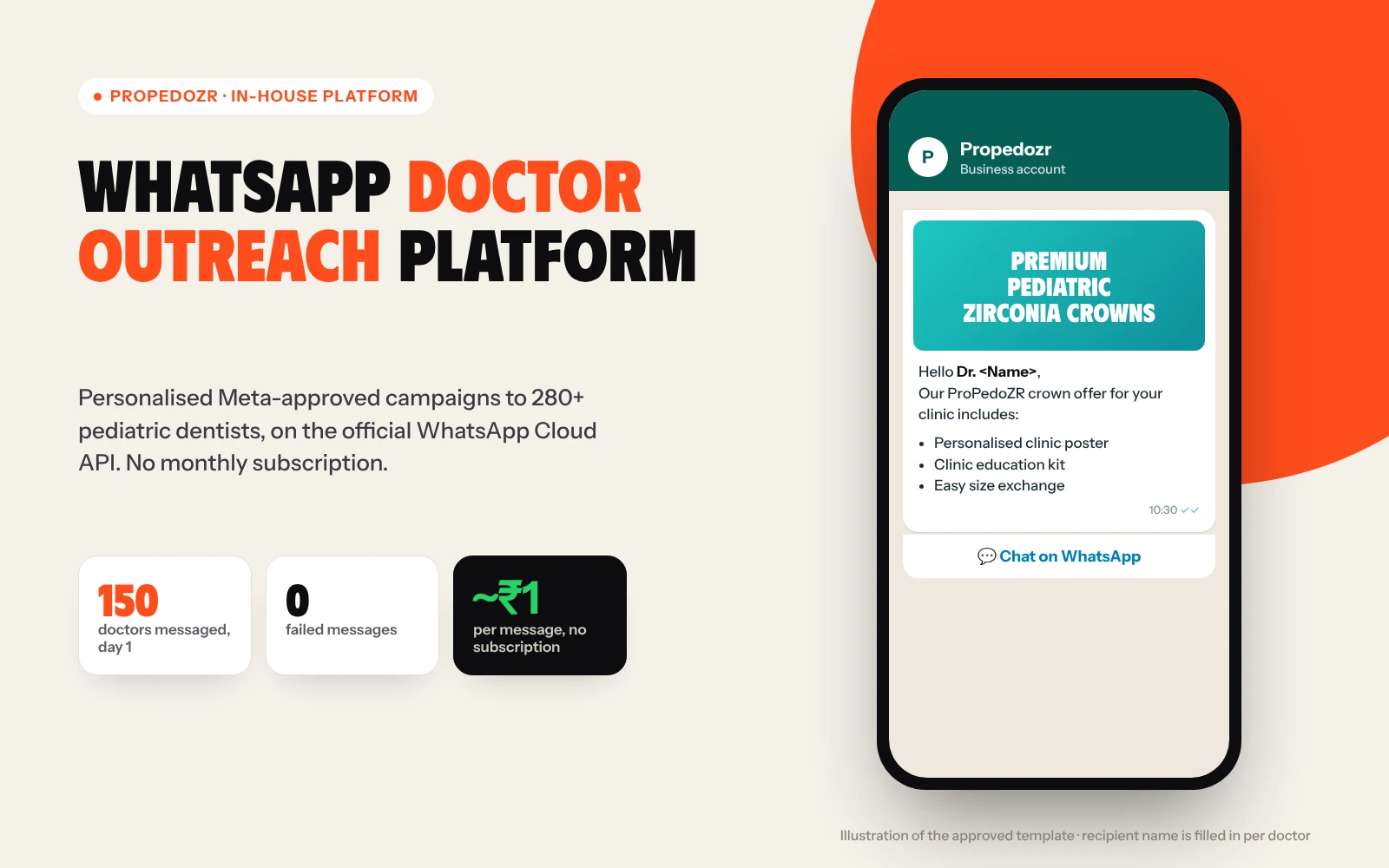
Business-initiated WhatsApp messages must use a Meta-approved template. The template opens with Hello Dr. and a variable that the system fills with each doctor's name, then the crown offer and a Chat on WhatsApp button. Every doctor gets a message addressed to them, not a generic blast.
Sending safely from a new number
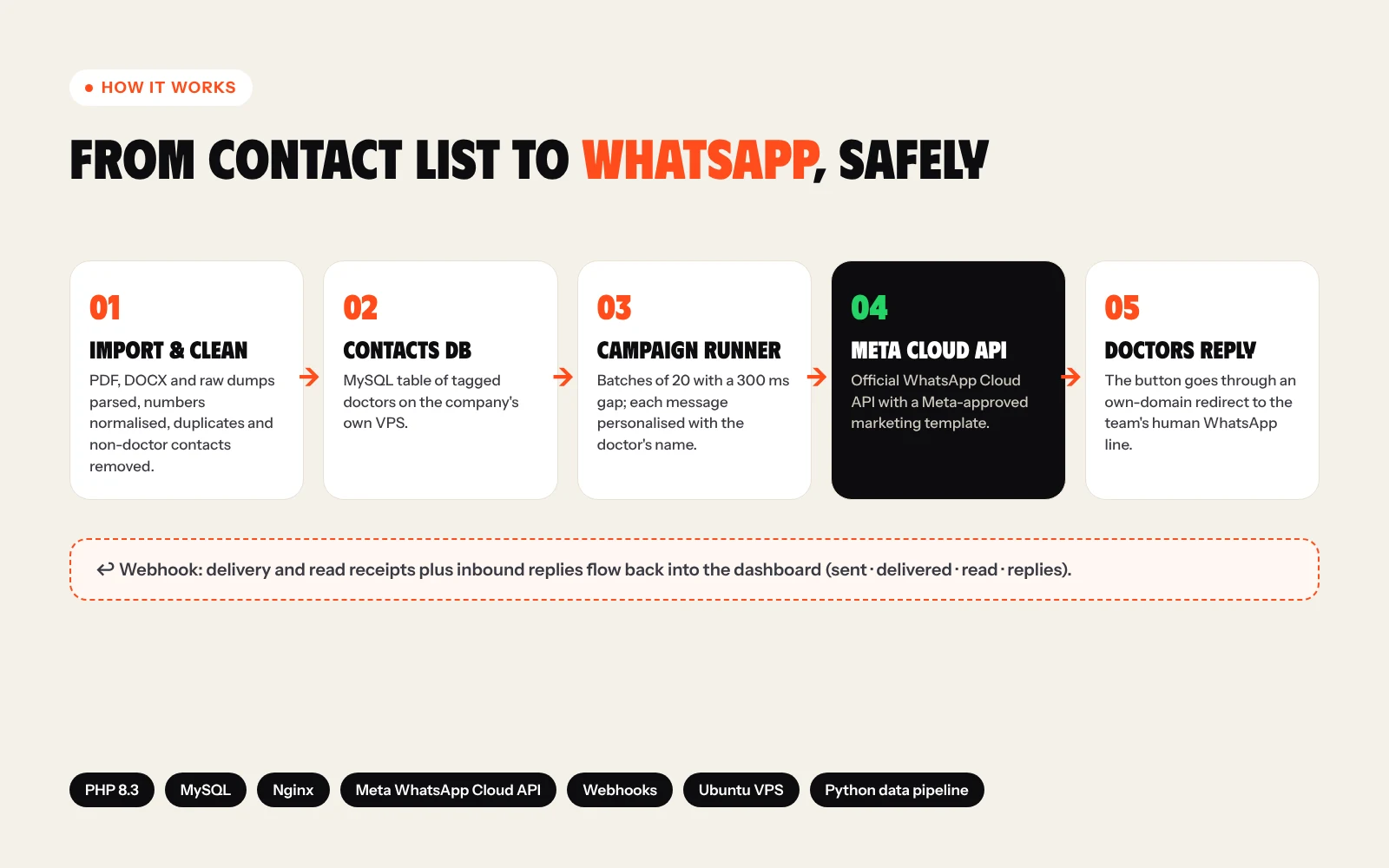
New numbers are fragile. The campaign runner sends in batches of 20 with a 300 ms gap, and the first day was capped at 150 messages, under the new-number daily limit, to build the sender's quality rating before scaling.
Cleaning the contact list first
The doctor list came from PDFs, Word files and raw exports. A pipeline parsed them, normalised every number, removed duplicates and stripped non-doctor contacts like the team's own numbers, patients, vendors and landlines. Sending to the wrong people is the fastest way to get reported and banned.
Replies that reach a person
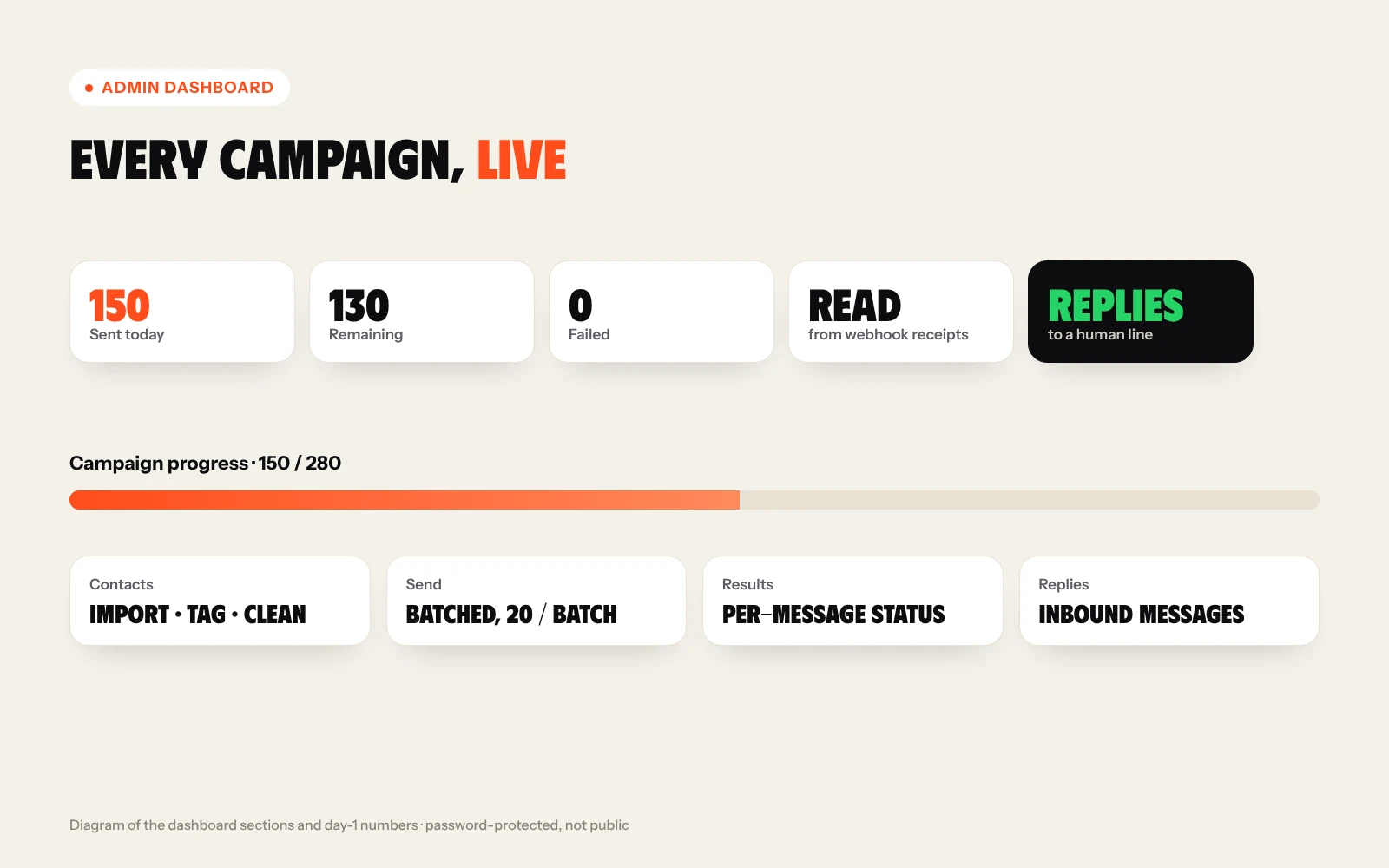
Meta doesn't allow direct wa.me links in template buttons, so the button points to a redirect page on the company's own domain, which forwards to the team's staffed WhatsApp number. A webhook also records delivery receipts, read receipts and replies in the dashboard.
Results and what's next
On day 1, 150 doctors received a personalised message with 0 failures; the remaining 130 were scheduled for the next day. A full 280-doctor campaign costs roughly ₹250–300 in Meta fees. Next: automatic referral codes on reply, a reply inbox inside the dashboard, automatic throttling based on quality rating, and campaigns segmented by region.